
The Quickening: Lessons from Spring in New Orleans

I used to say that New Orleans has only a brief spring and that summer seems to last forever.
I was wrong.
As I take my daily walks and pay close attention to the Earth around me, I now realize that spring here is long and layered.
Spring teaches us that transformation is gradual, relational, uneven, and deeply dependent on conditions. Spring is not an event. It is an unfolding.
Paying attention to that unfolding has begun to change the way I understand growth, timing, and even my own life.
The Many Stages of Spring
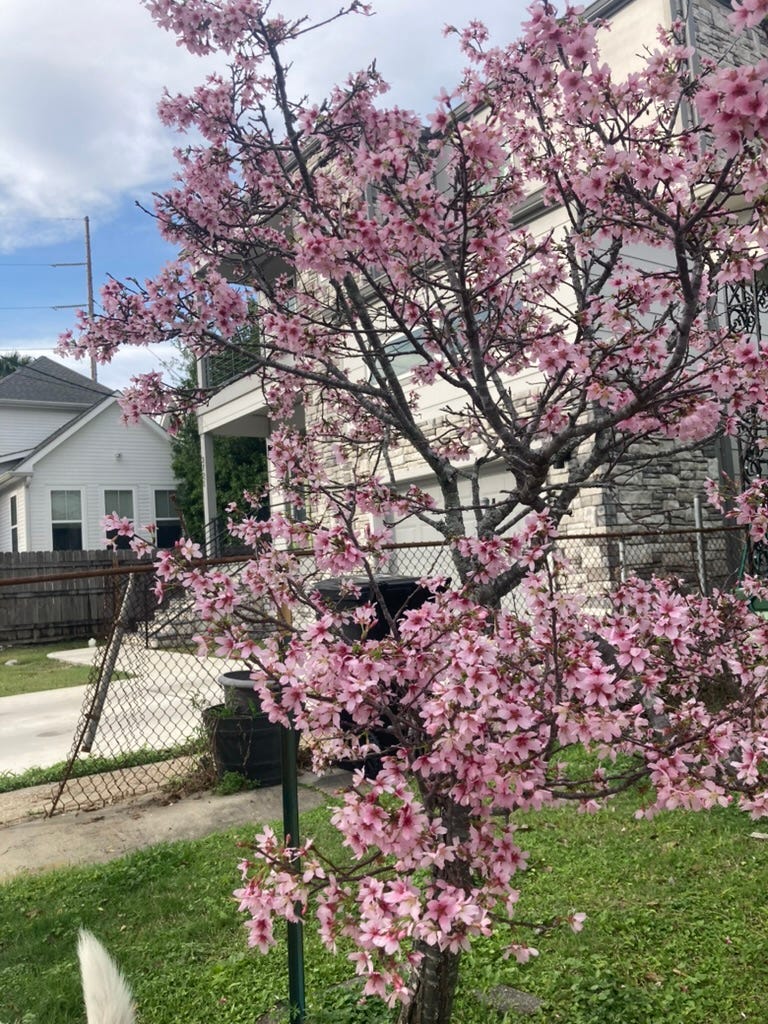
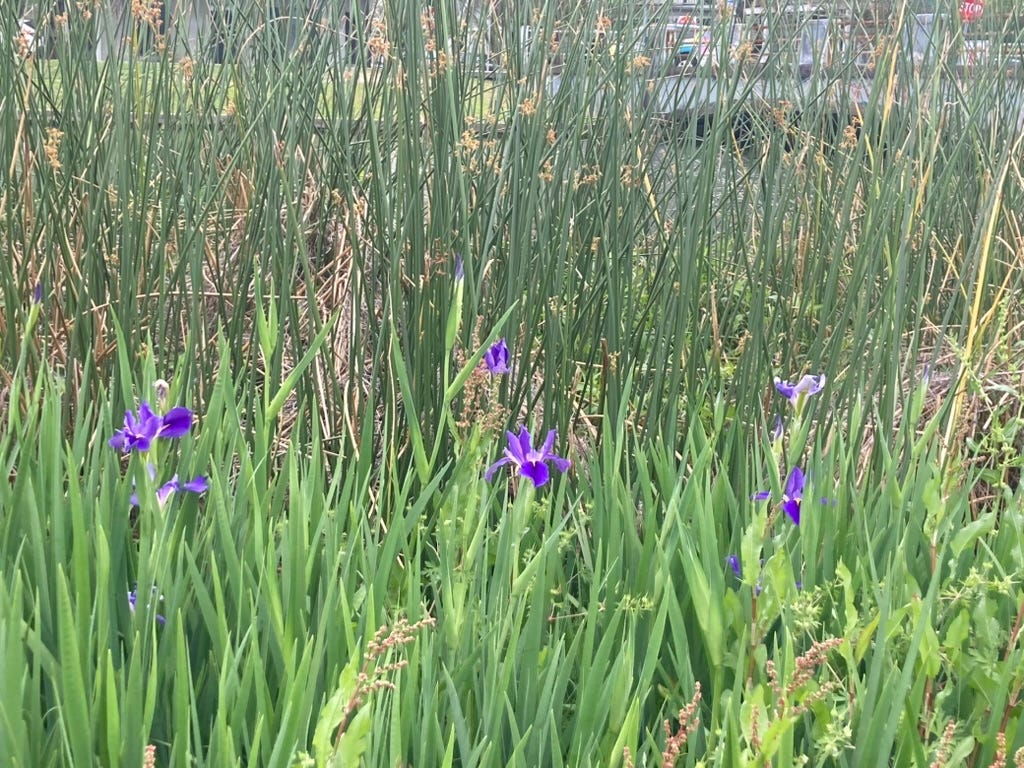
I first noted in my journal on February 19th that it truly felt like Early Spring. This was right after Mardi Gras, which increasingly feels to me like a ritual marking the energetic transition between winter and spring. It was warm and sunny with a gentle, refreshing breeze. Many buds were forming; the early sprouting herbs, like Carolina geranium, grew taller and started to bloom. A profusion of hot pink and purple blooms dotted the landscape—Japanese magnolia and cherry trees, eastern redbud, Satsuki azalea. The scent of orange blossoms filled the air and the aroma of the last of the sweet olive lingered. By the end of February, the first of the irises opened purple along the edges of Bayou St. John.
Small changes continued to appear across the land—more quickly than in the winter, but there were still periods of relative stillness with slow, prolonged reveals. Each blooming flower and burst of color was savored. The weather continued to tease with days of warmth followed by temperature drops, giving us a taste of spring and then pulling it back in a fun flirtation. The slower pace of emergence made me more present to each subtle shift.
This continued through much of March. I watched as the giant ragweed grew taller, our local small skullcap patches spread, and several types of azaleas dominated the scene. Mid-month, oleander appeared on stage, dressed in pinks and white, dropping its petals poetically on sidewalks. Mulberry trees began to fruit and sweet viburnum scented my path in the park.
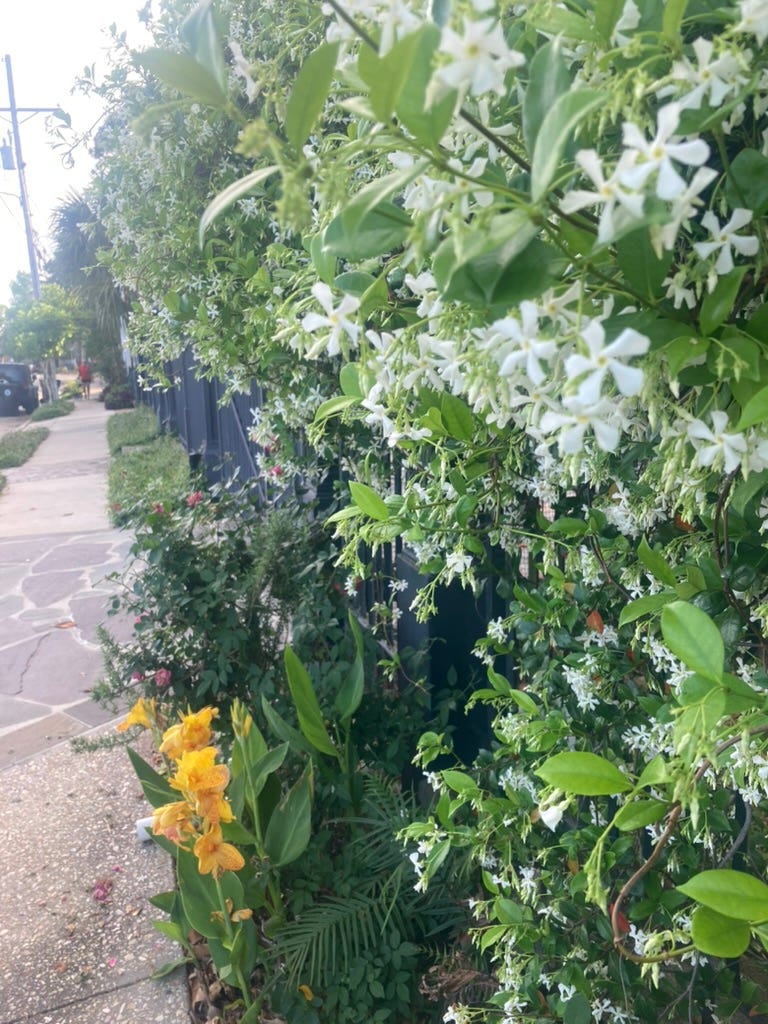
Finally, the star of the show (star jasmine) bloomed—a local favorite that marks “True Spring” for many of us—its sweet, intoxicating aroma filling the air. I’ve started thinking of this period as “Mid Spring” now as I watch its arc. The grass had fully turned over into vivid green; all of the hay-colored patches had been replaced with bright chlorophyll-filled blades. Some of the anticipated spring favorites (like Southern Magnolia/ M. grandiflora) had yet to fully pop off, but all around me I saw blooms and buds and growing leaves.
By mid April, spring was in full swing. Many plants were growing tall and leafing out far beyond their initial budding stages. I could barely keep up with the constant growth and evolutions. If I missed a few days on a particular path, I would find myself shocked to see all of the changes that had happened while I was away. Spring had shifted from emergence into momentum.
The Coexistence of Growth & Decay
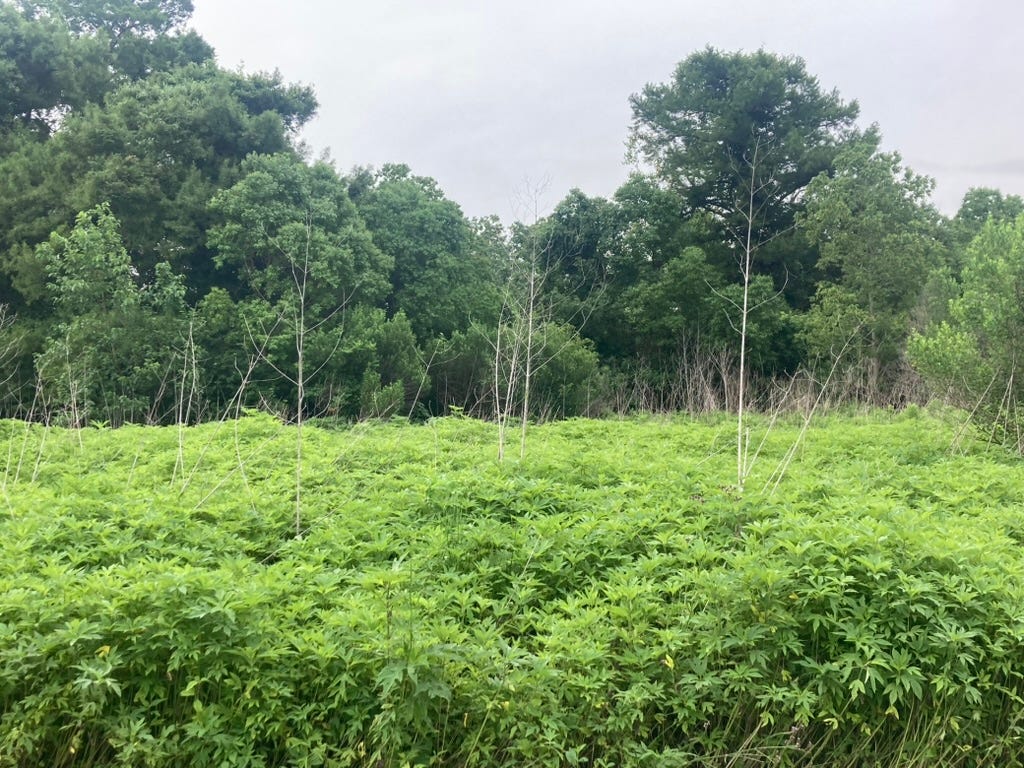
Post Mardi Gras, I expanded my walking path to include parts of City Park. In the fields along the woods, I saw tall, dead stalks of giant ragweed and watched them regularly, curious to see when—and how—they would fall. Would they topple on their own? Would new vining plants pull them down? Would animals repurpose them for their homes or food? However, they continued to stand throughout the spring (and still stand as of early May). That didn’t stop new growth from coming up below the towering stalks. Fresh green shoots crowded around the brittle stalks, weaving themselves through what remained of the previous season.
Similarly, throughout the park, in an unmaintained track of land, I continued to see signs of frost and winter—plants that had died but continued to cling to poles and trees, not having been cleared by human hands, like in the gardens and more maintained city spaces.
Emergence doesn’t require a complete clearing away. Nature rarely wipes the slate clean before beginning again.
In my essay on the lessons of winter, I wrote that “decay—composting—is a necessary stage for new life to spring forth. It’s an alchemical process.” Spring is teaching me that growth and decay often coexist. We can build new systems even while the old ones still stand. Nature has examples of this in abundance.
Conditions Matter
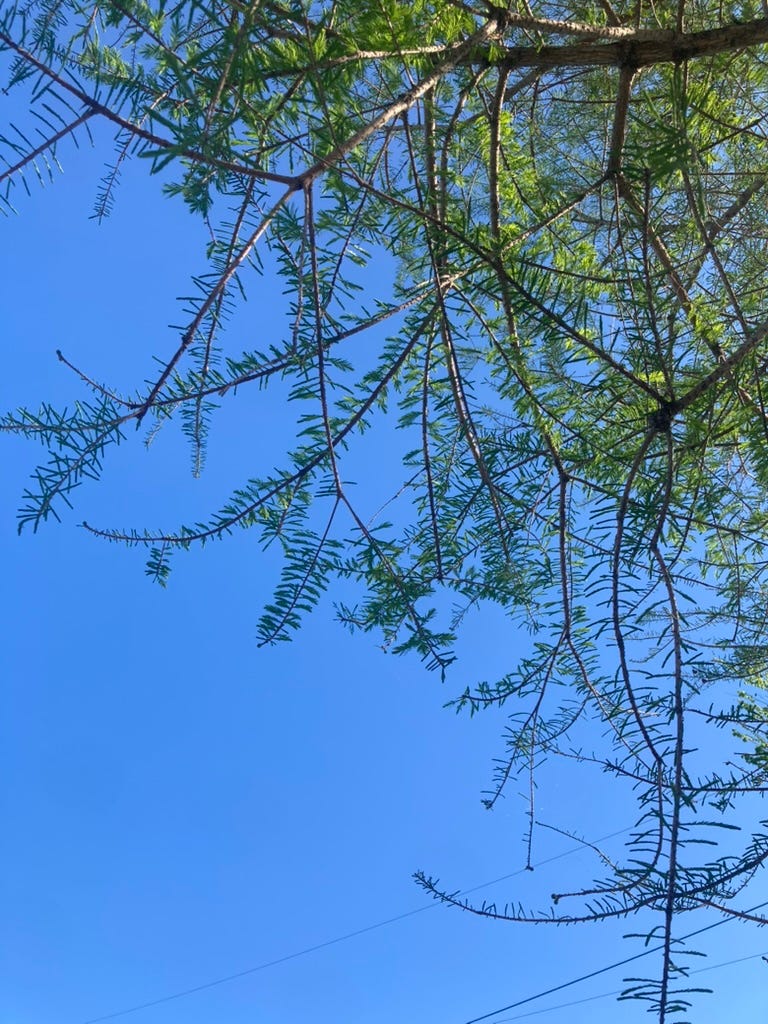
While most of our Bald Cypress trees dropped their needles over the winter and started the work of regrowing them in the spring, I encountered a huge, old cypress tree in a corner of City Park that didn’t appear to have shed its needles. At the same time that its peers were sprouting tiny new buds, it had long, mature needles and was “fully dressed”—lush, thick greenery covering its branches.
Why did this particular tree behave differently than its relatives in other parts of town, even in different parts of the same park? The whole fact that they drop their needles in the winter is built into their name- that’s why they’re called “bald.” Perhaps it was more sheltered from the cold in the spot its roots are planted. Perhaps its size and age played a role. Perhaps it dropped its needles earlier and regrew them sooner. I can only assume that there are different conditions that this tree lives in that led to it react differently.
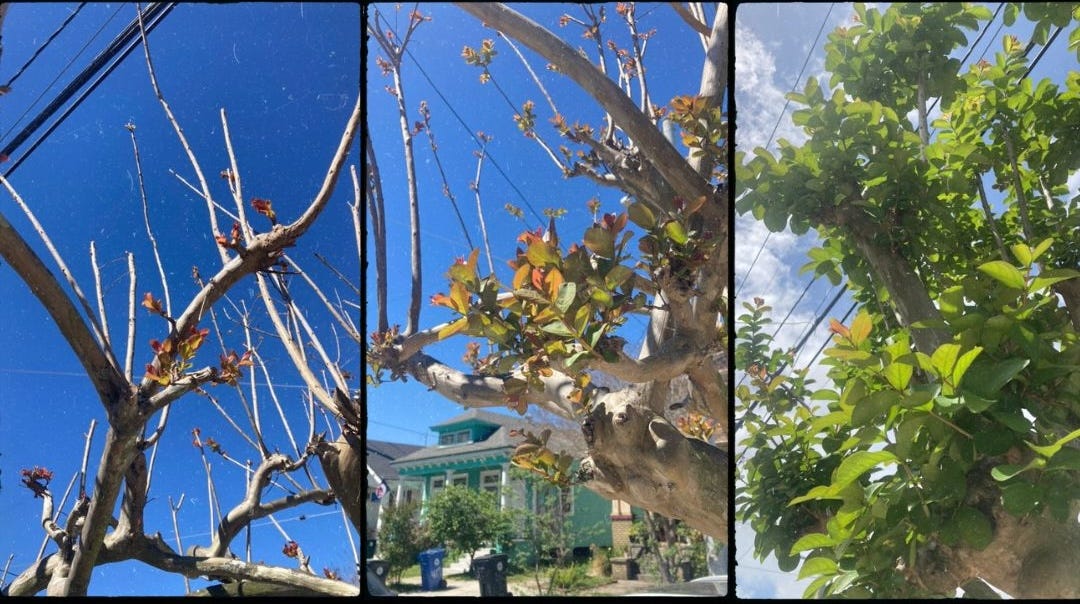
In another example, I observed crepe myrtles that were just beginning to leaf out in some places, while in other locations, they were more fully developed. Now, later in the season, there are crepe myrtles that are blooming while others are still working on their leaves. They are developing unevenly based on their locations and conditions.
From a related but different angle, in the second half of April, I traveled to visit my family in upstate New York. As I watched the landscape while the plane was landing, I felt like I had been transported back in time. I had left the full bloom of Mid Spring in New Orleans and entered Early Spring in the Northeast. Most of the trees (except evergreens, of course) were still without leaves. The landscape was predominantly brown and tan with areas of dark green.
As I walked around at ground level, in neighborhoods, I took in the vivid bursts of color of early blooming trees amongst the otherwise stark landscape. I felt the excitement of plants newly sprouting from the ground. It was a delight to see plants that grow in the place where I grew up but not in the place I live now, like my childhood favorite Daffodils, and ones I had never noticed before, like Skunk Cabbage. But what really stood out to me were the similarities between spring in these two very different places. For example, in both places, Japanese magnolia trees and azalea bushes are some of the early harbingers of the season.
More broadly, though the specific plants are different, there are similar patterns. It begins with a thawing, with browns and tans slowly giving way to greens. There are early trees that offer up colorful flowers before we get the longer lasting green leaves. Buds emerge, holding the energy of potential. The energies of anticipation and eagerness are present, as people are beyond ready to shed winter’s hibernation and reenter the world. In the coming weeks, the pace of this place will also begin to quicken as spring makes its way into full bloom.
These varied examples underscore for me what nature continues to show me—that conditions matter, timing matters, and also—certain patterns hold. Beings of the same kind can have totally different results based on where and when they are. Growth is relational and contextual. I find this reassuring—not just as I observe plants, but as I reflect on human lives, too.
Rebirth and Awakening Potential
Spring is widely considered a time of rebirth. Traditional cultures throughout the world have views and rituals around this and it is not hard to understand why. In many climates, plants that died back or went dormant during colder or drier seasons begin growing again. Animals begin birthing their next generations. The land is warming and all those who hibernate begin to emerge. Many Easter traditions also echo older spring fertility and rebirth celebrations tied to seasonal cycles.
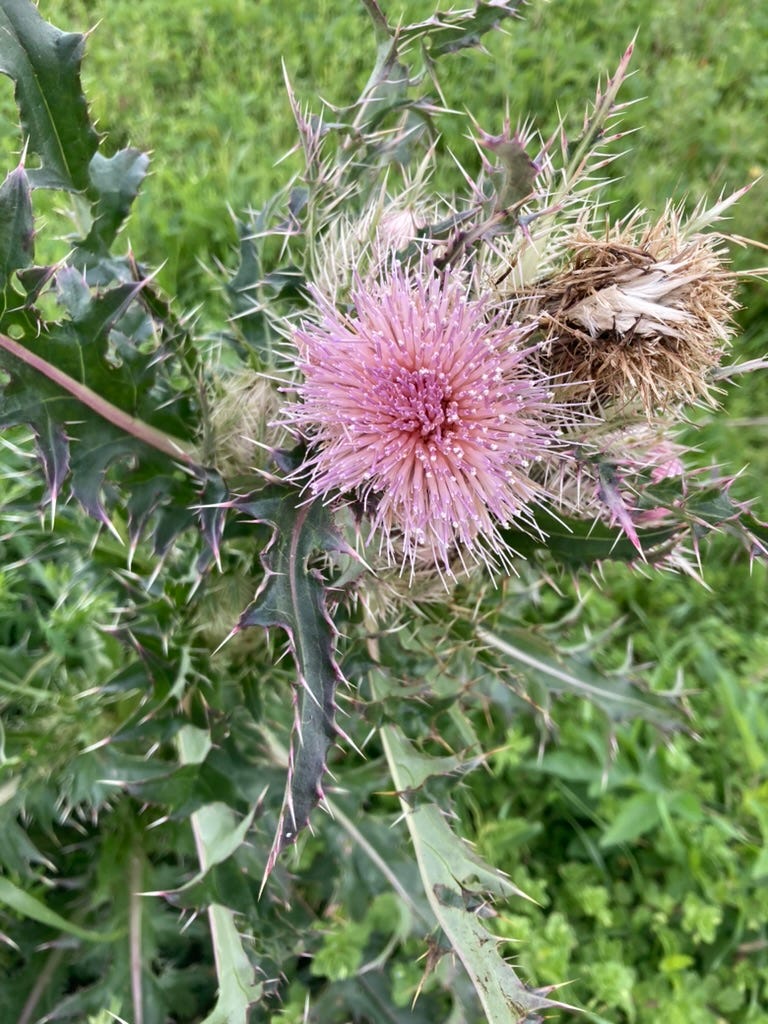
When I watch the Earth, I see signs of rebirth everywhere. Beyond the initial growth periods, I was especially moved to see how quickly plants that had been mowed down in the park came back. One week, I was admiring wild garlic and bull thistle along the edges of a wooded area, and was sad to return one morning to find that the park services had hacked them up with a riding mower. A relatively short time later, coincidentally (or not?) right around Easter, I noticed the bull thistle was already regenerating with a fresh bloom about to burst open—a process that had seemed so long in the making when winter was just transitioning into spring and the first round of bull thistles sprouted up from the ground. Now, the process repeated itself much more quickly and efficiently.
Perhaps Spring provides the conditions for latent potential to awaken and gain momentum.
The Beauty of Cycles
This greater understanding that I’ve been developing of the slow unfolding of spring and of the cyclical nature of Nature, in general, has really helped me to accept the beauty of these processes in my own life. When I was younger, I had a real resistance to that for some reason. Maybe I felt stuck in a loop—repeating the same things over and over, while humanity seemed trapped in a larger version of that cycle. I viewed it somewhat negatively. We’re born, we grow, we mate and raise children, we age, and we die. Different religions and cultures understand these cycles in their own ways, and we make meaning within the cycles, but I felt trapped by them. I longed to break out, to live a life of adventure and “larger meaning.” I felt that if I wasn’t challenging myself constantly, then I wasn’t living fully or reaching my potential.
I had a spiritual experience about 15 years ago that interrupted that thinking in me. I realized that these cycles are natural and beautiful, and maybe quite literally part of the essence of being human—being in bodies on this planet. That experience indirectly started me on my current path of connecting more intimately with the Earth, with plants, and with practices of being more fully in my body.
My walks and seasonal observations have deepened those insights around the beauty of cycles. I no longer experience them as boring and repetitive. I see the astounding nuance as the seasons unfold again and again with endless variations. I look for growth and change through the seasons and across them, year over year. I look forward to seeing how things deepen, how the physical and metaphorical soil builds upon itself with each new cycle of growth and decay.
I’m grateful for markers of time like the seasons and the moon that allow me to notice what in my own life has evolved since the last cycle, what goals I have met, and how my dreams have changed. This is quite literally the stuff of life—the day-in and day-out—and being present with it is one way that we can be present to the journey of our lives, not just propel ourselves from one milestone to another.
Lessons in Impermanence
After so much anticipation, the period in which spring is in full bloom—with perfect weather and flowers bursting everywhere—is so glorious and so brief.
It felt like I waited ages for the irises to bloom, and then they did and I reveled, and then the stunning purple flowers were gone, transforming into seed pods, their greenery receding once again into the background.
We wait for the star jasmine to bloom and fill our air with its sweet perfume, and it lasts just long enough to almost take it for granted, and then it’s gone again, not to return until next year.
Impermanence is another lesson of spring. It takes so long for everything to rise and then it does and it’s here in its resounding glory for just a blink of the eye. Impermanence and change are the only constants, but they can remind us to truly enjoy the moments and be present with what’s here while it’s here.
Already, I can feel traces of summer at the edges of the season—the first heavy humidity descending upon us, the awareness that this particular softness will not last forever.
Maybe that is part of Spring’s lesson too: not just emergence, but presence. To notice what is blooming while it’s here. To let ourselves fully inhabit the fleetingness of it.
Wow! This article is incredible!! Your examples of the interconnection between nature and the human experience are so spot on and give me so much hope, understanding, and encouragement. Thank you for inspiring me to slow down, notice, and embrace the season!
Love this article, Justine! Thank you for a beautifully written and insightful Heart Notes!